Debate article published in Dagbladet Ringkøbing-Skjern, January 6, 2025
Submitted by museum director Mette Bjerrum Jensen
Ringkøbing Fjord Museums are changing to preserve local history
Interest in the local history of the Skjern region is alive and well. Fortunately, it is! Most recently, a hole in the thatched roof of the Rakkerhuset in Bjørnemosen has sparked a critical debate on Facebook about the museum's priorities. We would like to explain the background to necessary decisions that can be painful and may not be as visible as a hole in the roof, but which create the foundation for future museum experiences.
Rakkerhuset and the Bundsbæk area
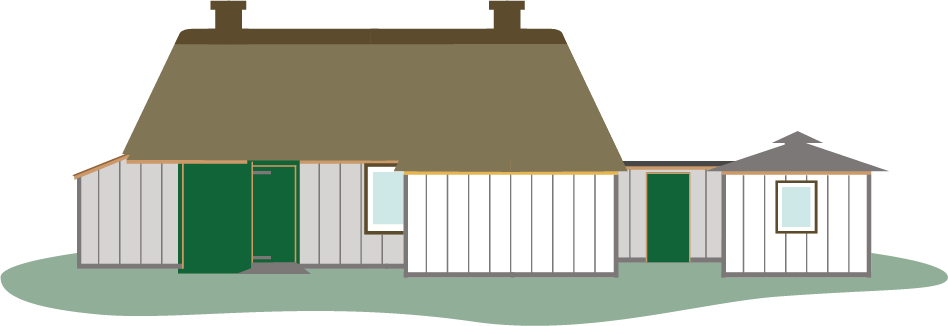
West Jutland's last rakers lived in Bjørnemosen until 1932, after which their modest house was completely destroyed. As part of the museum's then major investment in Bundsbæk Mølle , a new house was rebuilt on the site until 2001, using the old one as a model. Unfortunately, Rakkerhuset, Bundsbæk Mølle and Dejbjerg Iron Age were never quite able to keep up with the number of visitors and finances. Over the decades, the museum invested in a Christmas market, exhibitions, live entertainment and nature guides, but visitor numbers still fell.
Bundsbæk Mølle is a gem in the eyes of the museum, although not enough people share this opinion these days. That's why the museum - with money earned at other addresses - put a new roof on the mill in 2023-24. And thanks to enterprising volunteers, more than 2,500 guests visited Bundsbæk in 2024 - a fine number that does not compare to Bork Vikingehavn's 90,000 guests or the museum's other departments.
Buildings, buildings, buildings
Building preservation is not the central task of a state-recognized museum. Many cultural history museums do not own bricks. This makes them better able to focus on exhibitions. Ringkøbing Fjord Museum focuses on the life lived in the vast landscape of West Jutland. For many years, the museum focused on telling stories in historic buildings. As a result, the museum received many. Too many according to our supervisory authority, the Agency for Culture and Palaces. And too many in relation to the museum's financial framework for the costly maintenance.
In 2021 (the year before the collaboration on Naturkraft and Fiskeriets Hus started), the museum's board of directors adopted a development plan that also requires opt-outs. Since then, the museum has invested millions in the maintenance of Bundsbæk Mølle and Abelines Gaard. The buildings of Dejbjerg Iron Age are planned to be moved to Bork Vikingehavn. Gåsemandens Gård has been sold and Hattemagerhuset returned to the municipality.
Change to preserve
Ringkøbing Fjord Museums must also be relevant to future generations of local citizens and visitors to the municipality. The need for museums to change is nothing new. From Skjern's first museum in Anlægget, which is long gone, to today's 10 museums around the fjord, with Bork Vikingehavn as the flagship, the museum has been under constant change with buildings that have been bought, sold, newly built or merged. One or two generations down the line, everything will have changed again. This is how it should be, because this is the only way local history can reach its audience.
But the most important thing remains. Ringkøbing Fjord Museums has spent almost 120 years specializing in the interaction between people and nature in the vast landscape of West Jutland. A strong foundation has been created in the form of research and collection of objects and one of the country's earliest professional focus on how museums today must have attraction value. But also on the collaboration with locals and volunteers in all the museum's departments, including in and around Skjern.
That's why the museum runs the local history archive for Skjern. That's why the museum makes the newly refurbished Skjern Vindmølle available to associations and volunteers who attract visitors to exhibitions and local history cafés. That's why the museum is preparing a large historical book about the Skjern-Tarm region in collaboration with the Skjern and Tarm Development Forums. Therefore, the museum welcomes a new volunteer group around Bundsbæk Mølle . Interest in the local history of the Skjern region is alive and well!
Link to the opinion piece in the newspaper
The original Rakkerhus
The picture was taken before 1930
From the collection of Ringkøbing Fjord Museum

The ruins of Rakkerhuset
Drawn by A. Sørensen Randbøl, 1947.
From the collection of Ringkøbing Fjord Museum